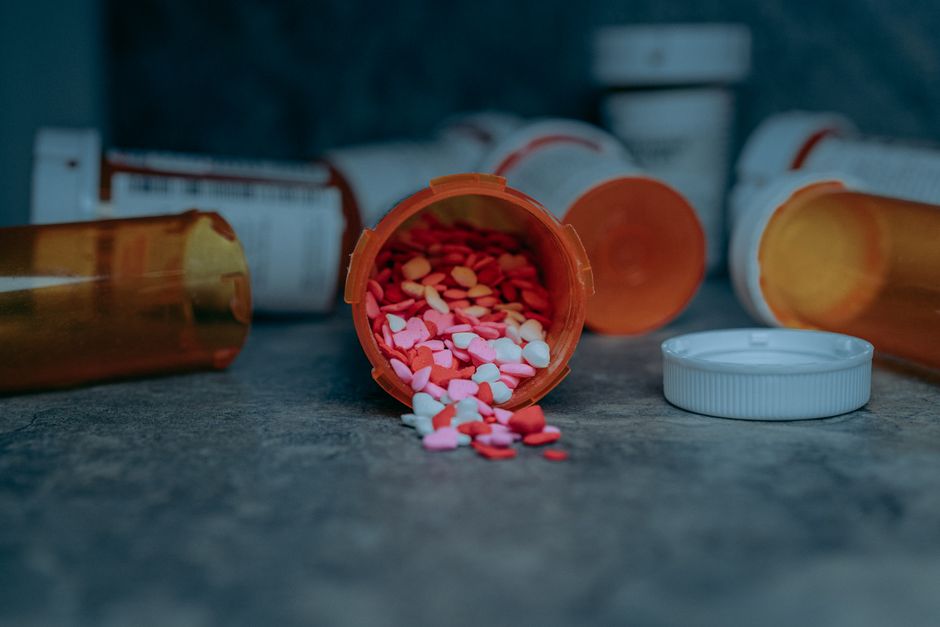
A drug interaction happens when one medicine changes how another behaves in the body, or when a medicine reacts with food, alcohol or a supplement. Interactions are among the most preventable causes of harm from medicines, and the check that catches most of them takes a pharmacist about two minutes.
Before you read on. Do not stop taking a prescribed medicine, or change how you take it, because of anything you read here. Talk to the prescriber or pharmacist who knows your medical history first.
The Main Kinds of Drug Interaction
Some interactions change how much of a medicine reaches your bloodstream. One drug can speed up or slow down the enzymes that break another down, raising or lowering its effective dose without anyone changing the prescription.
Others add effects together. Two medicines that each cause drowsiness, or each thin the blood, or each lower blood pressure, can combine into an effect neither would produce alone.
A third kind involves absorption. Some medicines bind to others in the stomach, or need particular stomach acidity, so taking them together reduces how much of one gets in at all.
What People Forget to Mention
Interaction checking only works on what the pharmacist knows about. The common gaps are over-the-counter medicines, supplements and herbal products, medicines prescribed by a different doctor, anything obtained abroad or online, and alcohol.
Supplements are the most underestimated. Several common herbal products meaningfully affect the enzymes that process prescription medicines, and people rarely think of them as drugs at all.
Using one pharmacy for everything, where practical, means the check runs against a complete list rather than a partial one.
Where the Official Information Lives
Every FDA label has a drug interactions section listing what is known for that medicine. You can read it for any product on DailyMed, and it is the authoritative source rather than a general interaction website.
Interaction sections describe what has been studied or reported. A combination that is not listed has not necessarily been proven safe; it may simply not have been studied, which is a distinction worth knowing when searching online.
Older Adults and Multiple Medicines
The chance of a drug interaction rises steeply with the number of medicines taken. Someone on eight medicines has far more possible pairings than someone on two, and many older adults are on more than eight.
📨 Get Free Mass Tort Guides Alerts
Free · No spam · Unsubscribe anytime
Age also changes how medicines are processed. Kidney and liver function decline gradually, so a dose that was appropriate at sixty can be too much at eighty even with no change in prescription.
A periodic medicines review, where a pharmacist or prescriber looks at everything together rather than one prescription at a time, is the single most useful thing available here. It is worth asking for by name.
Frequently Asked Questions
How do I check for a drug interaction?
Ask your pharmacist with a complete list, including over-the-counter products and supplements. The FDA label’s interactions section is the authoritative written source for each medicine.
Do supplements really interact with prescriptions?
Yes, and several common ones do so significantly. Tell your pharmacist about anything you take regularly, including vitamins and herbal products.
Is it safe to drink alcohol with my medicine?
It depends entirely on the medicine, and the label’s interactions section will address it. Your pharmacist can answer specifically for what you take.
What if two doctors prescribed medicines that interact?
Tell both, and use one pharmacy so the check runs against a complete list. This is common and pharmacists deal with it routinely.
Why Drug interaction Matters When You Look Up a Medicine
Most people arrive at a question about a medicine through a search, and what they find
first is rarely the official record. Understanding drug interaction is what lets you tell the
difference between a page reporting what the FDA actually says and a page built to
alarm.
The profile pages on this site are assembled directly from federal data: FDA
prescribing labels, the enforcement database that records recalls, and the adverse event
reporting system. Across the 25 medicines covered, that amounts to
12 carrying a boxed warning, 521 recall records, and
roughly 5,559,399 adverse event reports between them.
Those numbers are large, and largeness is exactly what gets misread. A high report
count reflects how many people take a medicine and how much attention it has had, not how
dangerous it is. A long recall list usually reflects many manufacturers rather than a
troubled drug. Reading drug interaction correctly is what turns those figures from frightening
into useful.
Do not stop taking a prescribed medicine, or change how you take it, because of anything you read here. Talk to the prescriber or pharmacist who knows your medical history first. What a page like this can do is help you arrive at that conversation
knowing what the official record says, and what it does not.
Official Sources
- DailyMed — the current FDA label for every marketed product
- FDA adverse event dashboard — public report data by drug
- FDA recalls and safety alerts — current recall notices
- FDA MedWatch — how to report a side effect
Related Guides
- Drug Safety Profiles for 25 Medicines
- All Drug Safety Explainers
- What a Boxed Warning Actually Means
- What FDA Adverse Event Reports Really Mean
- Drug Recalls: Classes and What They Mean
- Generic Drug Safety: Same and Different
- Side Effect vs Adverse Reaction
- How to Read an FDA Drug Label
- My Medication Was Recalled: What Now
You May Also Like
Medical and legal disclaimer. This page is general information drawn from public FDA sources. It is not medical advice, not legal advice, and not a substitute for the judgement of a clinician who knows your medical history. Nothing here states that any medicine caused illness or injury in any individual. Do not stop taking a prescribed medicine, or change how you take it, because of anything you read here. Talk to the prescriber or pharmacist who knows your medical history first.