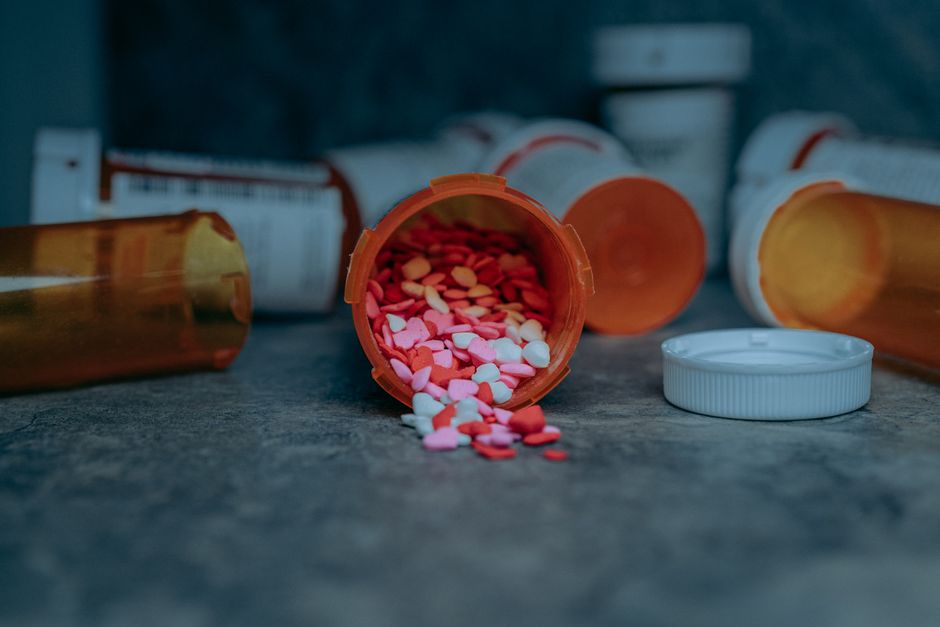
Acetaminophen Side Effects are documented on the FDA prescribing label, and reported separately by patients and doctors to the FDA’s adverse event system. This page sets out what the official record actually says about Acetaminophen: what it is approved to treat, what the label warns about, its recall history, and what the reported side effects are — along with what those figures do and do not mean.
- What Acetaminophen Is Prescribed For, and Where Acetaminophen Side Effects Come From
- Warnings on the Acetaminophen Label
- Warnings Beyond the Common Acetaminophen Side Effects
- Reported Acetaminophen Side Effects in the FDA Database
- Acetaminophen Recall History
- Is There Litigation Involving Acetaminophen?
- If You Are Worried About Acetaminophen Side Effects
- Frequently Asked Questions
- Official Sources
- Related Guides
Before you read on. Do not stop taking a prescribed medicine, or change how you take it, because of anything you read here. Talk to the prescriber or pharmacist who knows your medical history first.
What Acetaminophen Is Prescribed For, and Where Acetaminophen Side Effects Come From
According to the FDA label, Uses temporarily relieves minor aches and pains due to: the common cold headache backache minor pain of arthritis toothache muscular aches premenstrual and menstrual cramps temporarily reduces fever
Two separate official sources describe acetaminophen side effects. The prescribing label records what was observed in clinical trials, where the drug was compared against a control group. The FDA’s adverse event database records what patients and clinicians have reported since approval, which is a much larger but far less controlled picture. Both appear below, and they answer different questions.
| Active ingredient | Acetaminophen |
| Brand names on this label | TYLENOL Extra Strength |
| How it is given | oral |
| Boxed warning | See the label for this product |
| Recall records | 57 |
| Label last updated | 2024-11-07 |
Warnings on the Acetaminophen Label
The FDA prescribing label carries the full set of warnings and precautions for Acetaminophen. Because a medicine can have several approved labels from different manufacturers and formulations, the safest way to see the warnings that apply to the exact product you have is to read the label for that product.
You can look up any product’s current FDA label on DailyMed, the National Library of Medicine’s official label database, using the name on your bottle or box.
Warnings Beyond the Common Acetaminophen Side Effects
The label’s warnings and precautions section describes risks the FDA requires prescribers to weigh. For Acetaminophen it covers: Warnings Liver warning This product contains acetaminophen. Severe liver damage may occur if you take more than 4,000 mg of acetaminophen in 24 hours with other drugs containing acetaminophen 3 or more alcoholic drinks every day while using this product Allergy alert: acetaminophen may cause severe skin reactions.
Symptoms may include: skin reddening blisters rash If a skin reaction occurs, stop use and seek medical help right away. Do not use with any other drug containing acetaminophen (prescription or nonprescription).
If you are not sure whether a drug contains acetaminophen, ask a doctor or pharmacist. if you are allergic to acetaminophen or any of the inactive ingredients in this product Ask a doctor before use if you have liver disease Ask a doctor or pharmacist before use if you are taking the blood thinning drug warfarin Stop use and ask a doctor if pain gets worse or lasts more than 10 days fever gets worse or lasts more than 3 days new symptoms occur redness or swelling is present These could be signs of a serious condition. […]
These are the risks the FDA has judged significant enough to state formally, and they sit apart from the routine acetaminophen side effects most people ask about. They apply to different patients to very different degrees, which is why the same medicine can be routine for one person and unsuitable for another.
Reported Acetaminophen Side Effects in the FDA Database
Reported acetaminophen side effects — and what these numbers do not mean
The FDA’s adverse event database holds 668,282 reports mentioning Acetaminophen, of which 476,063 were classified as serious.
Read those numbers carefully. An adverse event report means somebody told the FDA that something happened to a person taking this medicine. It is not a finding that the medicine caused it. Reports are submitted voluntarily by patients, families, doctors and manufacturers; nobody verifies them; and the same event can be reported more than once.
Report volume tracks how many people take a drug, how new it is, and how much attention it is getting. A widely prescribed medicine will always show more reports than a rarely used one, and reports rise sharply when a drug is in the news or in litigation. A large number here does not mean a drug is dangerous, and a small number does not mean it is safe.
| Most frequently reported | Reports |
|---|---|
| Pain | 48,853 |
| Fatigue | 44,906 |
| Nausea | 40,985 |
| Overdose | 40,497 |
| Drug Dependence | 39,160 |
| Headache | 37,905 |
| Death | 36,203 |
| Diarrhoea | 31,607 |
Source: FDA Adverse Event Reporting System (FAERS), retrieved July 2026. Non-clinical reporting categories such as “off label use” have been excluded from the list above because they describe how a drug was used, not something that happened to a patient.
Acetaminophen Recall History
The FDA enforcement database records 57 recall entries involving Acetaminophen products (5 Class I, 47 Class II, 5 Class III). A recall almost always concerns specific manufactured batches rather than the medicine itself, and different manufacturers of the same generic drug have separate recall records.
The FDA classifies recalls by how serious the potential consequence is. Class I means a reasonable probability of serious harm or death; Class II means temporary or reversible harm is possible; Class III means the product breaks a regulation but is unlikely to cause harm.
📨 Get Free Mass Tort Guides Alerts
Free · No spam · Unsubscribe anytime
| Date | Class | Recalling firm | Reason |
|---|---|---|---|
| 2026-01-14 | Class II | SpecGx, LLC | Failed Tablet/Capsule Specification: There is a potential for the imprint to be missing on tablets. |
| 2026-01-14 | Class II | SpecGx, LLC | Failed Tablet/Capsule Specification: There is a potential for the imprint to be missing on tablets. |
| 2025-11-05 | Class II | Kenvue Brands LLC | Defective Container |
| 2025-09-03 | Class II | Baxter Healthcare Corporation | Discoloration |
| 2025-06-25 | Class II | Aurobindo Pharma USA Inc | cGMP deviations: Due to confirmed consumer complaints received with the observation of tablet discoloration (brown surface on tablets). |
If a batch you have was recalled, the pharmacy that dispensed it is the fastest way to find out and to get a replacement. Do not simply stop taking a prescribed medicine because a recall notice exists — the recall may not affect your batch, and stopping can carry its own risk.
Is There Litigation Involving Acetaminophen?
Lawsuits involving Acetaminophen have been filed in the United States. A lawsuit is an allegation: it means claimants assert that a manufacturer failed to warn adequately or that a product was defective. It is not a finding that the medicine caused any particular person’s illness, and courts have not necessarily reached any conclusion.
Whether any individual claim has merit depends on medical records, timing and the law in that person’s state. Our case pages track the current status of the litigation itself.
Read the current case status and filing information →
Litigation Timeline
- This medicine is the subject of federal multidistrict litigation (MDL-3043). Read our full case page on Tylenol Autism ›
Litigation does not mean a medicine has been proven to cause harm. Do not stop taking a prescribed medicine because of anything you read here — talk to the prescriber or pharmacist who knows your history.
If You Are Worried About Acetaminophen Side Effects
Concern about acetaminophen side effects is a good reason to have a conversation, and not a reason to act alone. Do not stop taking a prescribed medicine, or change how you take it, because of anything you read here. Talk to the prescriber or pharmacist who knows your medical history first. Stopping some medicines abruptly carries risks of its own, and your prescriber can tell you whether that applies to yours.
Write down what you have noticed and when it started before the appointment. Not everything that happens while taking a medicine is one of its acetaminophen side effects, and a specific account — what changed, when, and how often — is what lets a clinician tell the difference.
You can also report a side effect directly to the FDA through MedWatch. Reports from patients are part of how safety signals are detected, and filing one takes a few minutes.
Frequently Asked Questions
What are the most commonly reported acetaminophen side effects?
In FDA reports, the most frequently mentioned are pain, fatigue, nausea. The label’s own adverse reactions section, drawn from clinical trials, is the better guide to how common a side effect actually is, because reports to the FDA are not collected in a way that supports rates.
Has Acetaminophen been recalled?
There are 57 recall records for Acetaminophen products, the most recent dated 2026-01-14. Recalls generally affect specific manufactured batches rather than the medicine as a whole. Your pharmacy can tell you whether a batch you have was affected.
Does Acetaminophen have a boxed warning?
A medicine can have several approved labels from different manufacturers, so the reliable answer for the exact product you have is on that product’s label. You can look it up on DailyMed using the name on your packaging.
Do the FDA report numbers tell me how common these acetaminophen side effects are?
No. Reports are unverified, anyone can file one, and the total mostly reflects how many people take the medicine and how much attention it is getting. A high count is not evidence of danger, and a low one is not evidence of safety. Clinical trial data on the label is the source that supports rates.
Where can I check acetaminophen side effects for the exact product I have?
DailyMed holds the current FDA label for every marketed product, searchable by the name on your packaging. Different manufacturers and formulations of the same medicine can have slightly different labels, so checking the one you actually have is worth the two minutes.
Official Sources
- DailyMed (National Library of Medicine) — the current FDA prescribing label for every product
- FDA Adverse Event Reporting System dashboard — the public report data summarised above
- FDA recalls and safety alerts — current recall notices
- FDA MedWatch — how to report a side effect yourself
Related Guides
Medical and legal disclaimer. This page summarises publicly available FDA data about Acetaminophen and is general information, not medical advice, and not legal advice. It is not a substitute for the judgement of a clinician who knows your medical history. Nothing here states that Acetaminophen caused any illness or injury in any individual. Adverse event reports are unverified and do not establish causation.
You May Also Like
FDA labels are revised regularly; confirm current information on DailyMed or with your pharmacist. Do not stop taking a prescribed medicine, or change how you take it, because of anything you read here. Talk to the prescriber or pharmacist who knows your medical history first.